You Are The Answer To Your Ancestors’ Prayers

Ancestral Trauma Therapy
Virtual sessions available throughout California
Your body carries more than your own story. It holds the grief, resilience, and unfinished survival responses of those who came before you. Healing ancestral trauma means gently listening to what your nervous system inherited and helping it release what no longer belongs to you.
You don’t have to keep living in patterns that began generations ago. Real relief is possible — and you don’t have to do it alone.
Ancestral trauma is when stress and survival habits from the generations that came before us lives on in our bodies and nervous systems. War, displacement, colonialism, racism, poverty, and exploitation taught families to focus on surviving, and often made rest and connection impossible. When staying quiet, alert, or disconnected from body and land kept people alive, those habits passed down through the nervous system, not just through memories.
Even after danger ends, our bodies can keep using those old protective patterns. Somatic therapy helps the nervous system finish and let go of those survival responses so we can feel safer, more connected, and able to rest.
We inherit ancestral trauma innocently. None of us chose the histories we were born into or the survival patterns our nervous systems learned to protect us. Healing this trauma is an act of reverence and reckoning — a courageous choice to tend what was passed down and interrupt inherited survival patterns in service of our collective liberation. When we restore safety in our bodies, we help create a world that is kinder and safer for our grandchildren.

You may be carrying ancestral trauma if your reactions feel bigger or older than your personal story can explain.
You might recognize ancestral trauma if you:
have intense emotional or bodily reactions with no clear personal trauma memory
feel highly sensitive, hypervigilant, or easily overwhelmed
come from a family shaped by addiction, poverty, displacement, or violence
notice repeating patterns of harm, abandonment, or instability in your lineage
carry grief or fear that feels older than your own life
feel driven by overwork, perfectionism, or people-pleasing
feel disconnected from your body, emotions, or sense of belonging
hold trauma from both having been harmed and having caused harm to others
These patterns are not signs that something is wrong with you. They are signs that your nervous system learned brilliant strategies to survive conditions that no longer exist. Somatic therapy offers a way to gently listen to these inherited survival responses and help your body release what no longer belongs to the present.

How We Work with Ancestral Trauma Through Somatic Experiencing
What if you could go from:
⟡ Living in inherited vigilance, collapse, or overwork → Feeling more rooted, resourced, and safe in your body?
⟡ Carrying grief, fear, or shame that feels older than your own life → Feeling present, grounded, and free to live from choice rather than survival?
⟡ Repeating painful family patterns → Interrupting inherited survival strategies in service of your liberation?
⟡ Carrying what your lineage could not finish processing → Letting your nervous system finally lay down what no longer belongs to you?
-
We begin by slowing down and building a felt sense of safety and trust—both in the therapeutic relationship and in your body. We orient to present-moment support, grounding, and internal and external resources so your nervous system never has to do more than it can handle. This creates a reverent container where inherited survival responses can begin to soften without urgency, force, or retraumatization.
-
Together, we begin tracking your internal landscape—your nervous system patterns, protective strategies, emotions, sensations, impulses, and postural habits. We listen to how ancestral trauma lives in your body now, without requiring a personal narrative, family records, or conscious memory. We work in small, titrated doses and gently pendulate between ease and activation so inherited survival responses can safely reveal themselves and begin to complete.
-
As your capacity grows, your body is supported in finishing interrupted fight, flight, freeze, or collapse responses that were never allowed to resolve—often generations ago. Your nervous system begins to recognize that the present is different from the past and that new choices are now possible. We restore a felt sense of agency, dignity, and choice in your body so you are no longer living inside rhythms of protection that no longer fit your life.
As inherited survival patterns loosen, your nervous system becomes more capable of holding the realities of this world without collapsing or hardening. You grow your capacity to stay present with grief, anger, and uncertainty while remaining rooted in connection and care.
From here, healing becomes mobilization. You learn how to move toward your values without burning out or reenacting inherited trauma responses, becoming more available for love, community, and collective liberation.
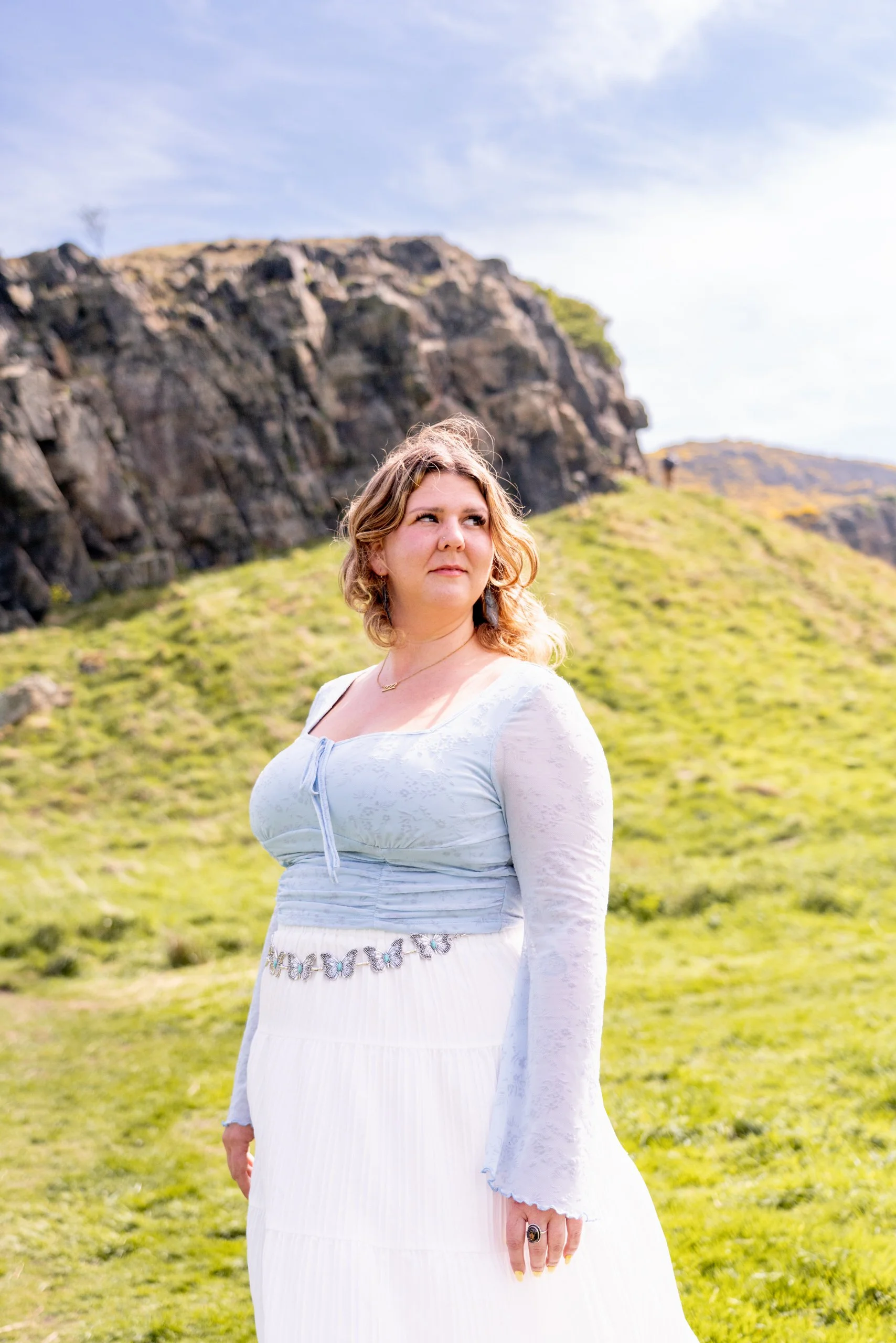
Hi, I’m Kayleigh. I’m a California-licensed clinical social worker and somatic therapist who helps people tend ancestral and intergenerational trauma — the nervous-system wounds carried through our lineages after generations of violence, displacement, colonization, and exploitation.
I work with highly sensitive people and cycle breakers who sense that some of what they carry did not begin with them. Many feel hypervigilant, exhausted, or disconnected from their bodies and notice repeating family patterns around addiction, abuse, or instability. They are deeply loving people who want to live differently than their ancestors had to — but feel trapped inside inherited survival rhythms they don’t know how to release.
Here’s why I’m passionate about this work: for most of human history, we lived inside cultures that had communal and embodied ways of metabolizing trauma and grief. Through colonialism, capitalism, and the breaking of land-based and communal ways of life, we lost many of these practices. Trauma became privatized and buried inside individual bodies.
This work is an intuitive reclamation of ancient lineage-healing practices that resemble shamanic traditions — and it is also grounded in science. I work with Somatic Experiencing® and nervous-system–based, evidence-informed trauma therapies rooted in neuroscience and psychophysiology.
For me, this is liberation work. Healing ancestral trauma is a courageous act of reverence and reckoning — a way of tending what was passed down so it does not have to be passed forward. When we restore safety in our bodies, we help create a world that is gentler, freer, and safer for our grandchildren.
If you feel called to tend what your lineage could not finish, I would be honored to walk with you. Healing ancestral trauma is brave, sacred work — and you do not have to do it alone.